

GLP-1 receptor agonists, often referred to as GLP-1s, have gained significant attention for their role in weight management and metabolic health. Given the well-established link between obesity and sleep apnea, many are wondering how these medications might impact sleep quality and whether the need for a formal sleep study still stands. At Sleep Center of Colorado, we aim to provide clarity on this evolving topic, helping you understand the complexities of sleep health and the importance of accurate diagnosis.

Understanding the Connection: Weight, GLP-1s, and Sleep Apnea
Obstructive sleep apnea (OSA) is often exacerbated, and sometimes even caused, by excess weight. When individuals carry extra weight, particularly around the neck, it can lead to increased soft tissue that obstructs the airway during sleep. GLP-1 medications, such as semaglutide and tirzepatide, work by mimicking natural hormones that regulate appetite and blood sugar. This often results in significant weight loss, which can in turn reduce the anatomical obstructions contributing to OSA. Improved metabolic health, another benefit of these drugs, may also play a role in better sleep regulation.

Do GLP-1s "Cure" Sleep Apnea?
While weight loss achieved with GLP-1s can dramatically improve sleep apnea symptoms for many, it's crucial to understand that it's not a guaranteed cure. Sleep apnea is a complex condition with multiple potential contributing factors beyond just weight. Airway anatomy, craniofacial structure, muscle tone, and even neurological factors can all play a role. For some individuals, weight loss may reduce the severity of their sleep apnea or even resolve it, while others may still experience significant airway obstruction even after losing a substantial amount of weight. Relying solely on weight loss without a proper medical evaluation could leave underlying issues unaddressed.

Why a Sleep Study Remains Essential
Even if you are taking GLP-1 medications and experiencing weight loss, a comprehensive sleep study remains a cornerstone of effective sleep apnea management. Here's why:
Accurate Diagnosis and Severity Assessment: A sleep study precisely measures the frequency and severity of breathing interruptions, oxygen desaturations, and sleep fragmentation. This data is critical for understanding your specific condition, whether it's mild, moderate, or severe, and if it's primarily obstructive or has central components.
Identifying Other Sleep Disorders: Sleep apnea symptoms can overlap with other sleep conditions, such as insomnia, restless legs syndrome, or narcolepsy. A sleep study can help differentiate these or identify co-existing disorders that also require attention.
Monitoring Treatment Effectiveness: If you've been diagnosed with sleep apnea and are undergoing treatment (such as CPAP therapy), a follow-up sleep study might be necessary to assess the impact of weight loss and potentially adjust your therapy settings. It ensures that your treatment remains optimized for your current health status.
Personalized Treatment Planning: Based on objective sleep study data, a sleep specialist can develop a tailored treatment plan that goes beyond weight management. This might include oral appliances, positional therapy, or continued positive airway pressure (CPAP) therapy, even if at a reduced setting.

Beyond Weight Loss: Comprehensive Sleep Care
Weight loss is an excellent step towards improving overall health and can certainly alleviate sleep apnea. However, the intricacies of sleep health demand a precise and personalized approach. A sleep study provides the objective data needed to understand your unique physiological sleep patterns and respiratory events, ensuring that any treatment, whether it's related to weight management or not, is truly effective.
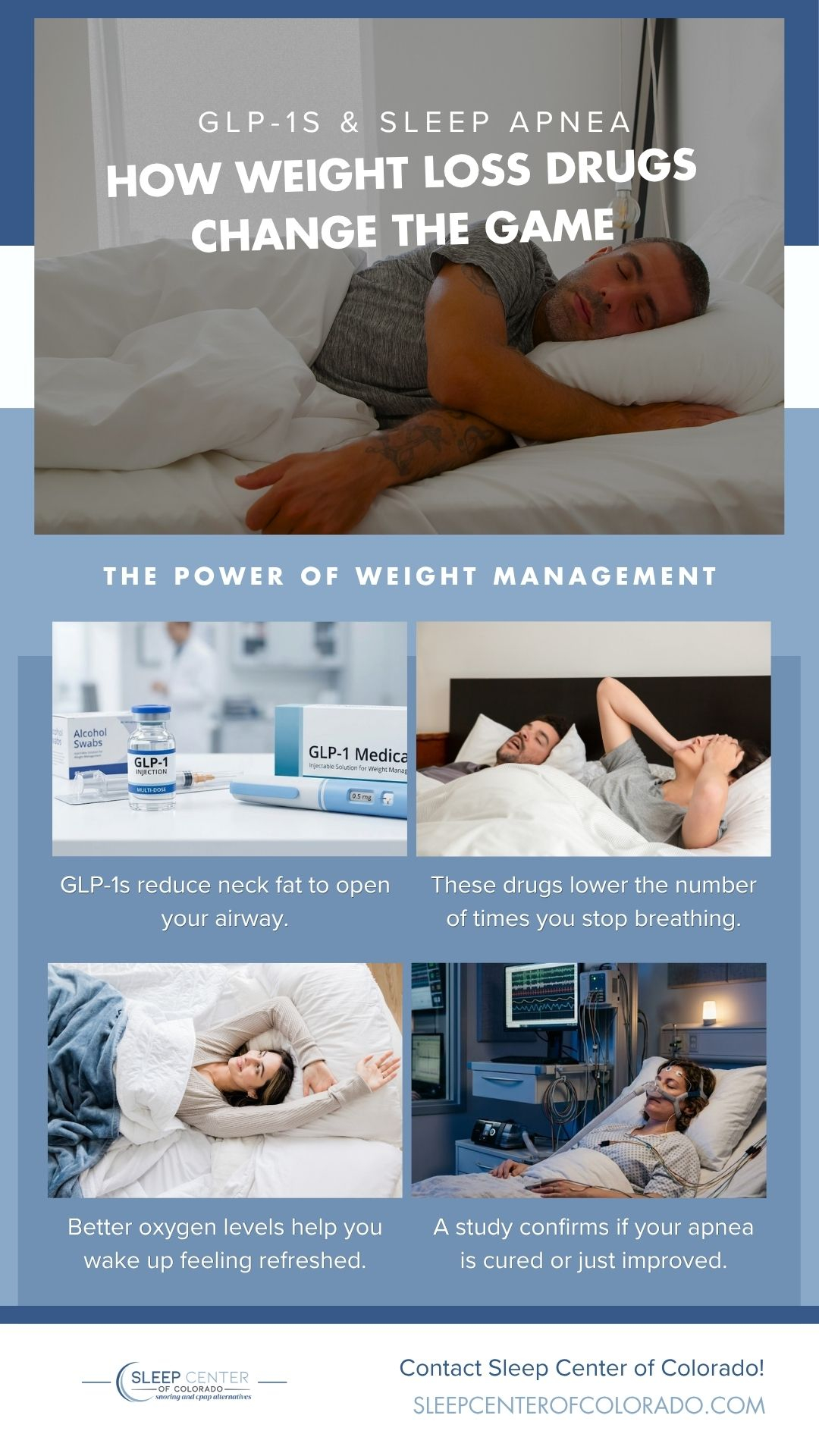
While GLP-1 medications offer a promising avenue for weight loss and potentially improving sleep apnea, they do not replace the diagnostic power of a sleep study. For adults struggling with sleep issues, especially those for whom previous treatments like CPAP may not have been fully effective, understanding the full picture of your sleep health is vital. To learn more about how a professional sleep assessment can guide your journey to better sleep, we encourage you to contact a sleep specialist at the Sleep Center of Colorado.