

Waking up with a throbbing headache and a mind that feels like it's stuck in quicksand is a frustrating way to start the day. For many, these aren't just occasional inconveniences but daily struggles that relentlessly chip away at their ability to focus, perform, and simply enjoy life. If you've been grappling with morning headaches and persistent brain fog, especially if traditional sleep solutions haven't brought relief, it's time to consider a deeper cause. At Sleep Center of Colorado, we understand the profound impact that undiagnosed sleep issues can have on your well-being and productivity.

The Morning After: Unpacking Headaches and Brain Fog
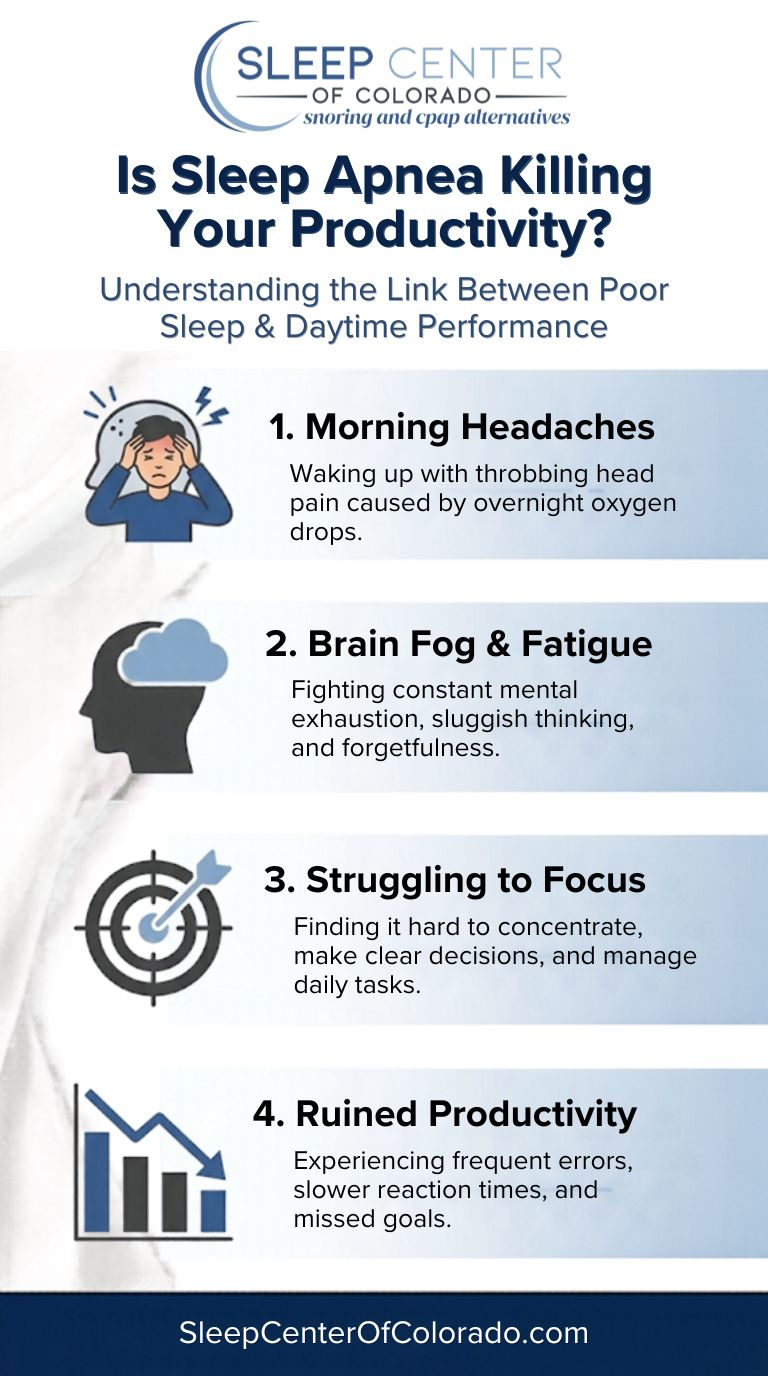
That persistent dull ache behind your eyes or the feeling of being unable to grasp clear thoughts upon waking is often a clear signal that your body isn't getting the restorative rest it desperately needs. When sleep is repeatedly interrupted or of poor quality, your brain and body don't have the opportunity to fully recover and reset. This can lead to a cascade of unwelcome symptoms. Morning headaches can stem from various factors related to sleep deprivation, such as increased carbon dioxide levels during sleep, changes in blood flow, or even muscle tension from struggling to breathe. Brain fog, on the other hand, is a direct consequence of sleep fragmentation, preventing your brain from cycling through the crucial stages of sleep necessary for cognitive processing, memory consolidation, and mental clarity.

Sleep Apnea: The Silent Saboteur of Your Mornings
For many adults struggling with these debilitating morning symptoms, the underlying issue is often Obstructive Sleep Apnea (OSA). This common condition involves repeated pauses in breathing or shallow breaths during sleep, often lasting ten seconds or more. These episodes occur because the airway temporarily collapses or becomes blocked. Each time breathing stops, your body briefly wakes up (though you may not remember it), disrupting your sleep cycle and lowering oxygen levels in your blood. This constant oxygen deprivation and fragmented sleep can directly contribute to those frustrating morning headaches and that pervasive brain fog. If CPAP therapy hasn't been effective for you, or if you're looking for alternative solutions, it's crucial to understand that there are other pathways to achieving restful sleep and clear mornings.

When Productivity Suffers: The Real Cost of Poor Sleep
The impact of sleep apnea-induced morning headaches and brain fog extends far beyond just feeling unwell; it significantly erodes your daily productivity and overall quality of life. Imagine trying to focus on important tasks at work, recall critical information, or make sound decisions when your brain feels clouded and sluggish. This constant mental fatigue can lead to decreased efficiency, increased errors, and a general lack of motivation. Simple daily tasks can become monumental challenges, and hobbies or social interactions might feel too draining to pursue. Over time, this chronic struggle can affect your career, relationships, and even your self-esteem, making it difficult to reach your full potential.
Restoring Clarity: A Path to Healthier Sleep and a Brighter Day
If morning headaches and brain fog are dimming your days and hindering your productivity, it’s a clear sign that your sleep quality needs attention. Understanding the root cause, particularly if sleep apnea is suspected, is the first step toward regaining your energy and mental sharpness. Don't let interrupted sleep continue to dictate your mornings and derail your potential. At Sleep Center of Colorado, we are dedicated to helping you discover effective, patient-focused solutions to restore your restorative sleep. Learn more about how we can help you reclaim your mornings and your productivity by exploring our services and requesting an appointment.